Introduction: A Sanctuary of Wellness, Not Just a Workroom
The kitchen has long been described as the undisputed heart of the home, but its function has evolved far beyond a simple workroom for preparing meals. It has become a central hub where daily rituals unfold, families gather, and cherished memories are made.
The Adalay Interiors design philosophy is rooted in this modern understanding, treating the kitchen and bath not merely as functional spaces but as extensions of a homeowner's lifestyle and well-being. The company's origins stem from a deep personal passion for cooking, wellness, and sustainable living, a perspective passed down through a family history of preparing fresh, seasonal foods and traditional preservation techniques. This ethos is why Adalay Interiors operates not just as a kitchen and bath showroom, but as a "lifestyle gallery"—a curated space where every design choice is a step toward a healthier, more beautiful life.
This mission is underpinned by a commitment to creating sustainable, long-lasting solutions that support a home’s overall well-being. With decades of experience and a deep appreciation for natural living, the designs at Adalay are built to endure, using quality materials and the latest technologies to make life easier and healthier. The expertise behind this philosophy is formally recognized; the president of Adalay Interiors serves as the President of the National Kitchen and Bath Association (NKBA) Central Florida Chapter, regularly contributing to national discussions on design trends and innovations.
This report presents a comprehensive exploration of how intentional kitchen design—meticulously tailored to a person’s unique habits, whether they are a dedicated chef or an occasional cook—can profoundly impact physical and mental health. The ultimate goal is to create a space so thoughtfully designed that it makes one feel good just by being in it.
The Restorative Power of Design: A Kitchen for the Mind
The environment we inhabit has a profound impact on our mental, emotional, and physical health. Research has shown that a positive feeling about one's home can positively affect mental well-being for up to 40% of people. This phenomenon is especially true for the kitchen, a space that serves as an anchor for daily routines and can influence behavioral patterns and lifestyle choices. Academic research supports this by framing the kitchen as a "restorative environment" that can directly enhance a person's psychological needs, particularly through the application of positive psychology principles.
This framework, known as the PERMA model, posits that well-being is comprised of five key dimensions:
A well-designed kitchen can support all of these elements. For example, a seamless, user-friendly layout can enhance a person’s sense of "Engagement" in the task of cooking, while an open, inviting atmosphere can foster stronger "Relationships" through family communication and social interaction.
Designing a space that reduces clutter and promotes a smooth workflow can lead to a sense of "Accomplishment" after a successful meal preparation, which in turn contributes to overall happiness. This approach moves beyond purely aesthetic considerations, focusing on how a space can actively support a holistic, happy way of living. This is precisely why Adalay Interiors focuses on more than just visual appeal; it is a commitment to designing for the emotional and mental well-being of its clients,
transforming a functional room into a true sanctuary.

The Sensory and Emotional Palette: Beyond Just the Visual
The experience of a kitchen is a deeply multi-sensory one, and its design can be approached as a comprehensive palette that influences more than just visual appeal. The research indicates that the impact of a space extends to how we experience it through sight, touch, smell, and even sound, creating a fully immersive environment.
The table below provides a concise summary of how specific colors can influence the atmosphere of a kitchen.
| Color | Associated Mood/Psychology | Suggested Applications |
| Red | Energetic, passionate, and appetite-stimulating | Dining nook, accent wall, or accessories |
| Yellow | Cheerful, optimistic, and welcoming | Main cabinet color for a bright space |
| Blue | Calming, serene, and appetite-suppressing | Serene and tranquil kitchen, not ideal for a primary dining area |
| Green | Harmonious, natural, and promotes mindful eating | Health-focused kitchens, can be paired with wood accents |
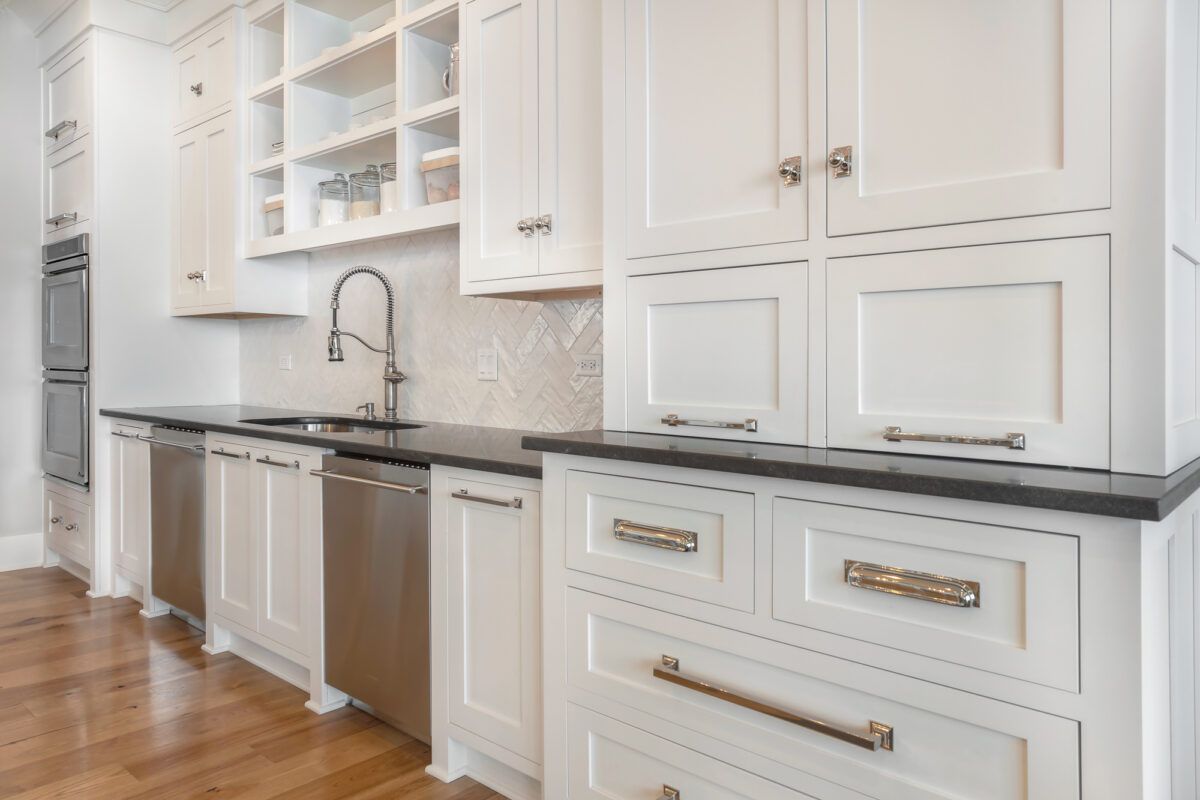
| White | Clean, pure, and spacious | Main cabinet color for a timeless and open feel |
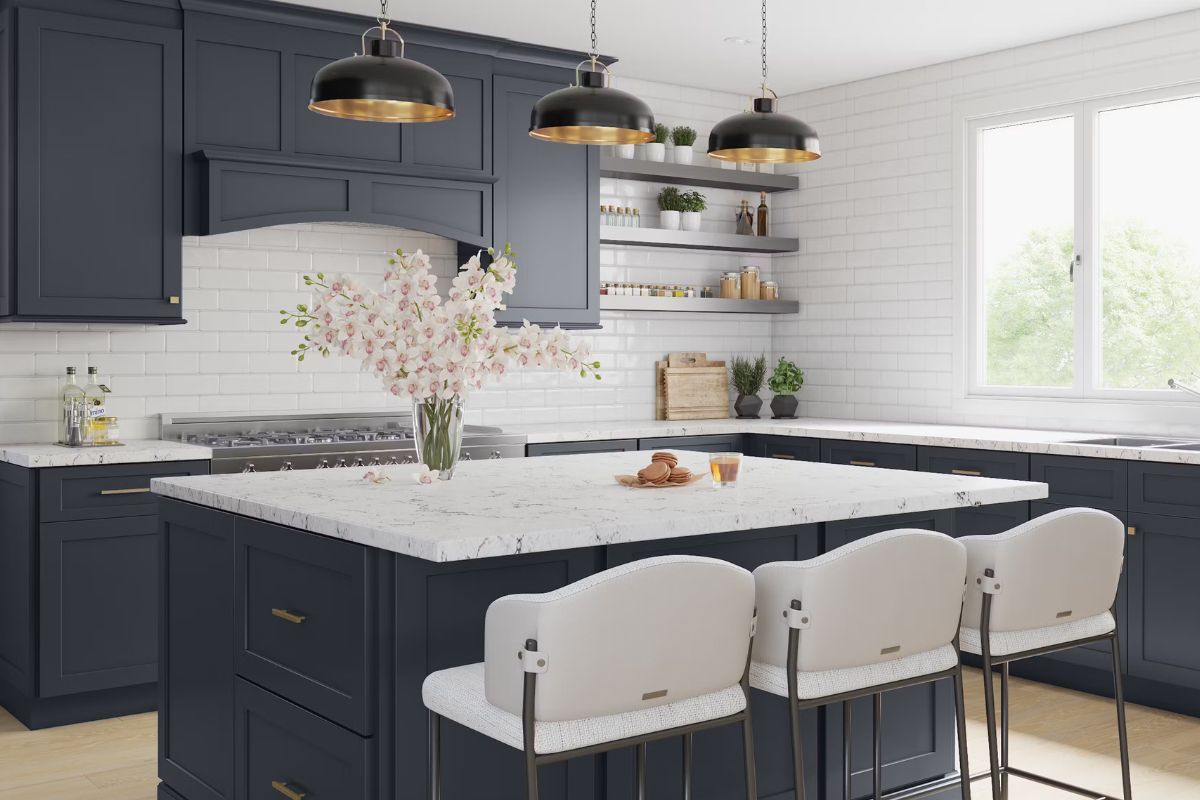
| Gray | Modern, balanced, and versatile | Cabinets and countertops, as a neutral backdrop |
| Black | Sophisticated and elegant | Accent color for hardware or a modern, minimalist aesthetic |
Beyond the Triangle: From Efficiency to Flow
The foundational principle of kitchen design has long been the "work triangle," which connects the three main work zones: the refrigerator (storage), the sink (preparation), and the stove (cooking). This concept, first formalized in the 1920s, aimed to create a smooth workflow and minimize unnecessary movement. A modern application of this principle extends beyond simple efficiency to a broader vision of inclusive design. A truly functional kitchen in the present day is also a future-proof kitchen, built with the principles of Universal Design (UD).
Universal Design is the practice of creating spaces that are easily and safely usable by people of all ages and abilities. This approach transforms ergonomics from a set of guidelines for a "standard" user to a comprehensive plan that accommodates everyone, from children helping with chores to seniors with limited mobility. The consequence of this design philosophy is a home that becomes a long-term investment in safety and accessibility. For example, features such as adjustable-height countertops and horizontal-opening dishwasher drawers are not just convenient; they actively reduce physical strain and ensure the kitchen remains a welcoming space for every member of the family.
Precision and Comfort: A Kitchen That Fits You
Ergonomic design is paramount for reducing physical strain and preventing long-term discomfort such as back, neck, and shoulder pain caused by repetitive motions and improper posture. A kitchen should be a space that works for you, not against you.
The tables below provide a practical guide to implementing these ergonomic principles, showcasing how even subtle adjustments can make a profound difference in comfort and function.
Ergonomic Design for Your Body
| Kitchen Zone | Ergonomic Principle | Actionable Tip |
| Worktop | Optimal Height to Prevent Stooping | Use the "elbow test" to determine the ideal height for your body. The ideal range is 850mm to 950mm, but it should be tailored to the individual. |
| Stove | Lowered Hob to Reduce Shoulder Strain | Consider placing the hob slightly lower than the main worktop to allow for a more comfortable posture when stirring pots and pans. |
| Sink | Accessible Depth to Avoid Bending | Ensure the sink's height is adjusted to the depth of the basin, allowing for comfortable posture when washing dishes without stooping. |
| Storage | Reaching Height for Key Items | Place frequently used items just above eye level or at elbow height when reaching up to minimize strain and overextension. |
| Appliances | Elevated Placement to Avoid Bending | Raise ovens and dishwashers to chest height to eliminate the need to repeatedly bend down to load and unload. |
Universal Design Features for a Future-Proof Kitchen
| Feature | Benefit | User/Lifestyle Impact |
| Adjustable Countertops | Accommodates various heights and seated positions | Inclusive for children, seniors, or wheelchair users. |
| Drawer-Style Dishwashers | Reduces back strain and minimizes heavy lifting | Easier to load and unload for everyone, including children and those with limited mobility. |
| Touchless Faucets & Lever Handles | Eliminates twisting motions and reduces germ spread | Ideal for people with arthritis, children, or anyone with their hands full. |
| Pull-Out Pantries & Shelves | Maximizes accessibility and prevents forgotten items | Makes all contents visible and easy to reach, reducing strain and food waste. |
| Side-Opening Ovens | Provides easier and safer access to the oven interior | Reduces the need to reach over a hot, heavy door, making it safer for all users. |
| Wide, Clear Aisles | Provides ample room for movement and turns | Accommodates wheelchairs, walkers, or multiple people in the kitchen at once. |
For the Everyday Chef: A Space That Nurtures Wellness
For the individual who cooks healthy meals every day, the kitchen is more than a space; it is a workshop for wellness. The principles of a professional kitchen, such as mise en place (the practice of preparing ingredients and tools before cooking) and "clean as you go," can be applied to a home environment to reduce stress and improve efficiency.
A well-designed kitchen with a clear "production line" and intelligent zoning makes the entire cooking process more mindful and less chaotic. A professional-level, zoned layout transforms cooking from a chore into a joyful, productive experience, which in turn fosters a happier lifestyle.
Designing for Healthy Habits. A kitchen can be actively designed to encourage healthier eating choices.
For the Occasional Cook: A Space That Delights and De-Stresses
For the person who cooks infrequently, the kitchen's purpose shifts from a high-efficiency production line to a social hub and a restorative environment.
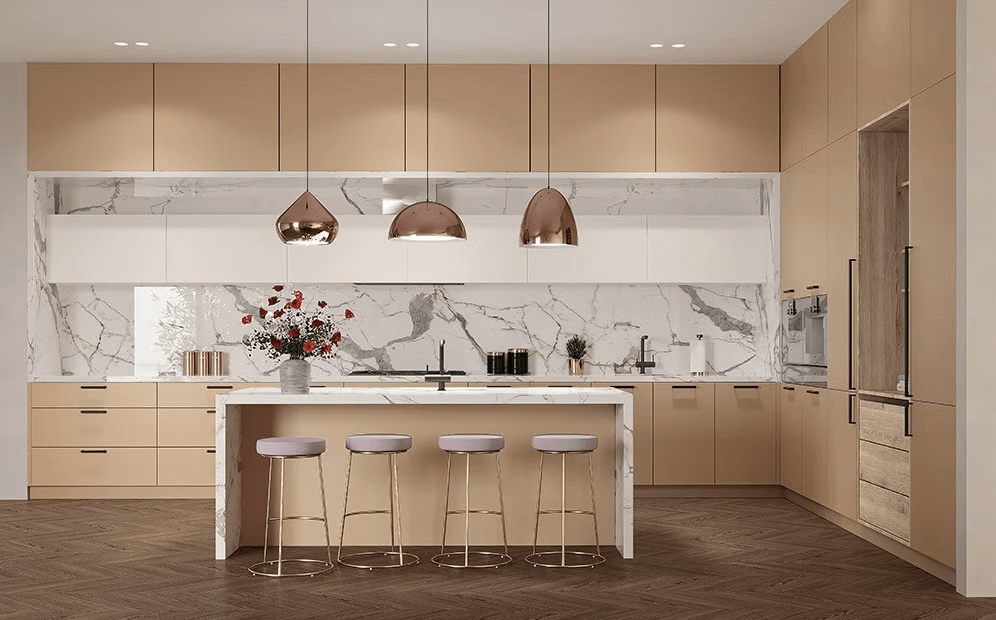
For this user, the kitchen must be a space that delights and de-stresses, serving as an inviting and easy-to-maintain sanctuary for life's simpler moments. Minimalist design, which often features an absence of upper cabinets or a focus on streamlined aesthetics, is not just a style choice; it is a deliberate decision to reduce visual and mental clutter. The result is a calm, uncluttered space that is both peaceful and easy to clean.
The findings presented in this report underscore a central truth: a truly exceptional kitchen is a personal one, meticulously tailored to the homeowner's unique story and habits. A wellness-focused kitchen is not a one-size-fits-all solution but a deeply personal blueprint for a happier and healthier life, whether that involves daily meal preparation or moments of quiet relaxation with loved ones.
Every design element, from the flow of the layout to the color of the cabinets and the texture of the materials, can be intentionally chosen to support physical well-being, foster mental clarity, and create an inviting sanctuary. The designs at Adalay Interiors are built to last, providing sustainable, long-lasting solutions that support well-being for years to come.
Adalay doesn't just design for today; it designs for the future, for the family, and for a life well-lived.
How to...Design a Kitchen That Supports Your Wellbeing Part 1 - WLLW
Step-Saving Kitchens - National Agricultural Library - USDA
Crafting Your Dream Kitchen: A Blueprint For Wellness and Nutrition
Kitchen and bathroom remodels - Tampa - Adalay Interiors
Some Surprising Ways Kitchen Design Can Impact Our Health and Wellbeing
User Well-Being in Kitchen Environment Design from a Positive ...
Designing a Sensory Kitchen for Wellness: Boosting Your Mood on Blue Monday
When psychology meets kitchen design - Wren Kitchens
The Psychology of Kitchen and Cooking | NeoKitchen®
Kitchen Cabinet Color Psychology: Impact on Mood & Appetite
The Impact of Color Psychology in Kitchen Design
Biophilic Design: Bring Nature Inside Your Home - Bertch Cabinet ...
What Are the Benefits of Biophilic Design? | INTEGRIS Health
Kitchen Design For Healthy Eating – Kitchen Experts
How to design an ergonomic kitchen? - Cyncly
Kitchen Ergonomics - Make your Kitchen More Efficient
The Psychology of Kitchen Design: How Countertops Influence Your Cooking Space - A Look Into Encore
Create a Seamless Workflow with the Perfect Kitchen Work Triangle - Patrick A. Finn
Universal Design | Kitchen Encounters
6 Kitchen Ideas Using Universal Design
Culinary Ergonomics: Cooking Up Comfort in the Kitchen
Kitchen Storage - The Container Store
Food Storage - Containers, Jars & More - IKEA US
How do I improve my overall workflow/ Productivity when cooking. : r/Chefs - Reddit
Guide to Minimalist Kitchen: How to Create a Beautifully Functional Space
Kitchens With No Uppers: Insanely Gorgeous or Just Insane? - Emily Henderson
5 Ways a Bespoke Kitchen Can Transform Your Lifestyle
6 Tips For Creating A Low-Maintenance Kitchen | Out Of The Woods ...
7 Tips For Designing A Low Maintenance, Easy-To-Clean Kitchen - YouTube